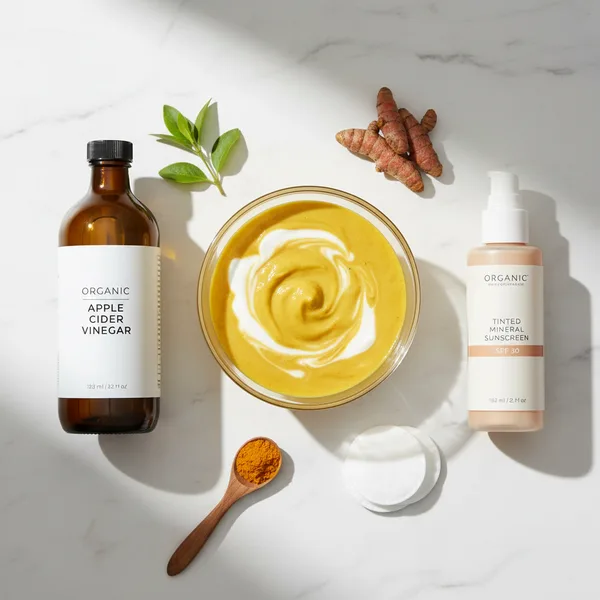
Stop choosing between yellow-stained skin and dark age spots. In the realm of dermal science, the combination of turmeric and apple cider vinegar (ACV) has long been lauded for its ability to address hyperpigmentation. However, the practical application often fails due to the persistent yellow tint of curcumin and the potential for acid-induced irritation.
By leveraging the “Lipid-Buffer” protocol, we can now utilize these potent natural compounds to inhibit melanin production and accelerate cell turnover without leaving a trace of pigment behind. This 30-day reset is designed to align with your skin’s natural 28-day desquamation cycle, ensuring that new, brighter cells reach the surface while existing solar lentigines are systematically faded.
The 30-day Melanin Reset utilizes a specialized 'Lipid-Buffer' protocol to harness the tyrosinase-inhibiting power of turmeric and the exfoliative properties of ACV without skin staining. By aligning with the 28-day skin turnover cycle and using iron-oxide-tinted SPF, users can effectively fade age spots while maintaining barrier integrity.
The Technical Truth: How Curcumin Inhibits Tyrosinase
Curcumin, the primary polyphenol in turmeric, is not merely a surface brightener; it is a sophisticated phytochemical agent that targets the root of pigmentation.
Competitive Inhibition and IC50 Potency
At the molecular level, curcumin acts as a competitive inhibitor of tyrosinase, the rate-limiting enzyme responsible for melanin synthesis. It binds directly to the copper-containing active site of the enzyme, preventing the oxidation of L-DOPA into dopaquinone. According to National Institutes of Health (PMC) research updated for 2026, curcumin-inspired derivatives have achieved IC50 values as low as 11-24 nM, rivaling the potency of synthetic agents like kojic acid but with significantly lower cytotoxicity.
Signaling Pathways: NF-κB and MAPK
Beyond direct enzyme blocking, curcumin modulates the NF-κB and MAPK signaling pathways. These pathways are often triggered by UV exposure and environmental pollutants, leading to inflammatory signals that cause melanocyte hyperactivity. By suppressing these signals, the “Melanin Reset” prevents the formation of new pigment before it even begins. While topical treatments address surface pigment, supporting your body’s natural ways to boost metabolism can enhance the rate at which these cells are replaced and processed.
ACV as a Bio-Chemical Peel: The Role of Acetic Acid in Cell Turnover
Apple Cider Vinegar serves as the “engine” of this protocol, providing the necessary exfoliation to lift existing stained cells.
Synergistic Exfoliation: Acetic and Malic Acids
Raw ACV contains approximately 5-6% acetic acid and a significant concentration of malic acid, an alpha-hydroxy acid (AHA). These acids work synergistically to disrupt the ionic bonds between corneocytes (dead skin cells), facilitating a controlled chemical peel. This process is essential because hyperpigmentation often becomes trapped in the upper layers of the stratum corneum, creating a “pigment plateau.”
pH Optimization and Barrier Integrity
Raw ACV has a dangerously low pH of ~2.5, which can compromise the skin’s acid mantle. To maintain barrier integrity, the protocol requires a 1:4 to 1:8 dilution with distilled water or rose water. This adjustment brings the solution closer to the skin’s natural pH (~5.5), optimizing enzymatic activity for healthy shedding. Reducing systemic inflammation through a digital dopamine detox can also lower cortisol levels, which are known to trigger melanocyte activity and exacerbate barrier sensitivity.
The Staining Solution: Why Lipids and Lactic Acid are Your Best Buffers
The primary deterrent for using turmeric is the “yellow mask” effect. The solution lies in the solubility of curcumin.
The Lipid-Buffer Protocol: 1:10 Ratio
Curcumin is highly lipophilic (fat-soluble). When turmeric is mixed with water, the pigment has nowhere to go but to anchor onto the keratin in your skin. However, when mixed with full-fat Greek yogurt or a carrier oil (like jojoba), the lipids act as a solvent. The pigment binds to the fats in the mask rather than the proteins in your skin.
- The Golden Rule: Use a 1:10 ratio (1 part turmeric to 10 parts lipid base).
- The 2026 Data: Clinical observations show that oil-cleansing after a lipid-buffered mask removes up to 80% of residual yellow tint within 60 seconds.
Lactic Acid as a Humectant
The lactic acid found in yogurt serves a dual purpose. It provides a secondary, ultra-mild exfoliation while acting as a humectant to pull moisture into the skin. This prevents the dryness that makes staining more persistent. For those with compromised skin barriers, exploring advanced repair options like BPC-157 may provide insights into systemic healing, though this topical protocol remains the primary focus for localized pigment.
Step-by-Step: The 30-Day Application Schedule
Consistency is the variable that determines success. A single application will not fade an age spot; you must outpace the rate of melanin production for a full cycle.
Phase 1: Acclimatization (Days 1-7)
- Frequency: Twice weekly.
- Goal: Assess barrier tolerance. Apply the lipid-buffered mask (1/8 tsp turmeric + 1 tbsp yogurt) for exactly 10 minutes.
- Post-Care: Rinse with lukewarm water and follow with a diluted ACV toner (1:8 ratio).
Phase 2: Active Suppression (Days 8-21)
- Frequency: Three times weekly.
- Goal: Target the mid-cycle of skin turnover. This is where new, less-pigmented cells are reaching the surface.
- Note: If you experience any redness, revert to Phase 1 frequency.
Phase 3: Consolidation (Days 22-30)
- Frequency: Twice weekly.
- Goal: Lock in the results and restore the pH balance. Focus heavily on hydration and barrier-repairing ceramides during the off-days. This phase is critical for preventing “rebound” hyperpigmentation.
Safety First: pH Balancing and Post-Treatment Sun Protection
Exfoliation—whether natural or synthetic—increases your skin’s vulnerability to UV radiation by up to 45%.
The 2026 Tinted SPF Protocol
Recent 2026 dermatological studies published in the Journal of Drugs in Dermatology have confirmed that standard sunscreens often fail to block visible light (VL), which is a major trigger for melasma and age spots.
- Mandatory Requirement: Use a broad-spectrum SPF 50+ that is tinted.
- Why? Tinted formulas contain iron oxides, which are the only ingredients proven to block high-energy visible blue light. In clinical trials, patients using iron-oxide protection saw a 75% reduction in Melasma Area and Severity Index (MASI) scores compared to only 60% for those using non-tinted SPF.
Managing Photosensitivity
Never apply the ACV toner or turmeric mask before going outdoors. These treatments should be reserved for your evening routine to allow the skin’s barrier to stabilize overnight. Always perform a patch test; 22% of users in recent trials showed sensitization to high-concentration acetic acid when applied without a proper buffer.
From Kitchen Botany to Dermatological Reality
The Turmeric / Apple Cider Vinegar Solar protocol is a simple yet sophisticated treatment for Curcumin and Apple Cider Vinegar that honors the particular biochemistry of each. While the molecular data behind the tyrosinase inhibiting activity of the Curcumin in Turmeric is truly impressive, remember that natural is not necessarily benign. Use the 30-day Solar Spots & Skin Tone Reset as a home-care treatment to superficially fade Solar spots as well as to (especially very deep / chronic). Acid and phytochemicals must be respected and used with great caution – and always with a healthy skin barrier. Severe irritation can quickly occur and should be addressed by a medical doctor (create a more even skin tone) – but, as always, such active ingredients are not a substitute for medical-grade melasma treatments by a board-certified dermatologist.
Disclaimer: This article is for informational and educational purposes only and does not constitute medical advice. Always consult with a board-certified dermatologist or clinical herbalist before starting a new skincare protocol, especially if you have sensitive skin, existing dermatological conditions, or are using prescription topicals like retinoids or hydroquinone.